

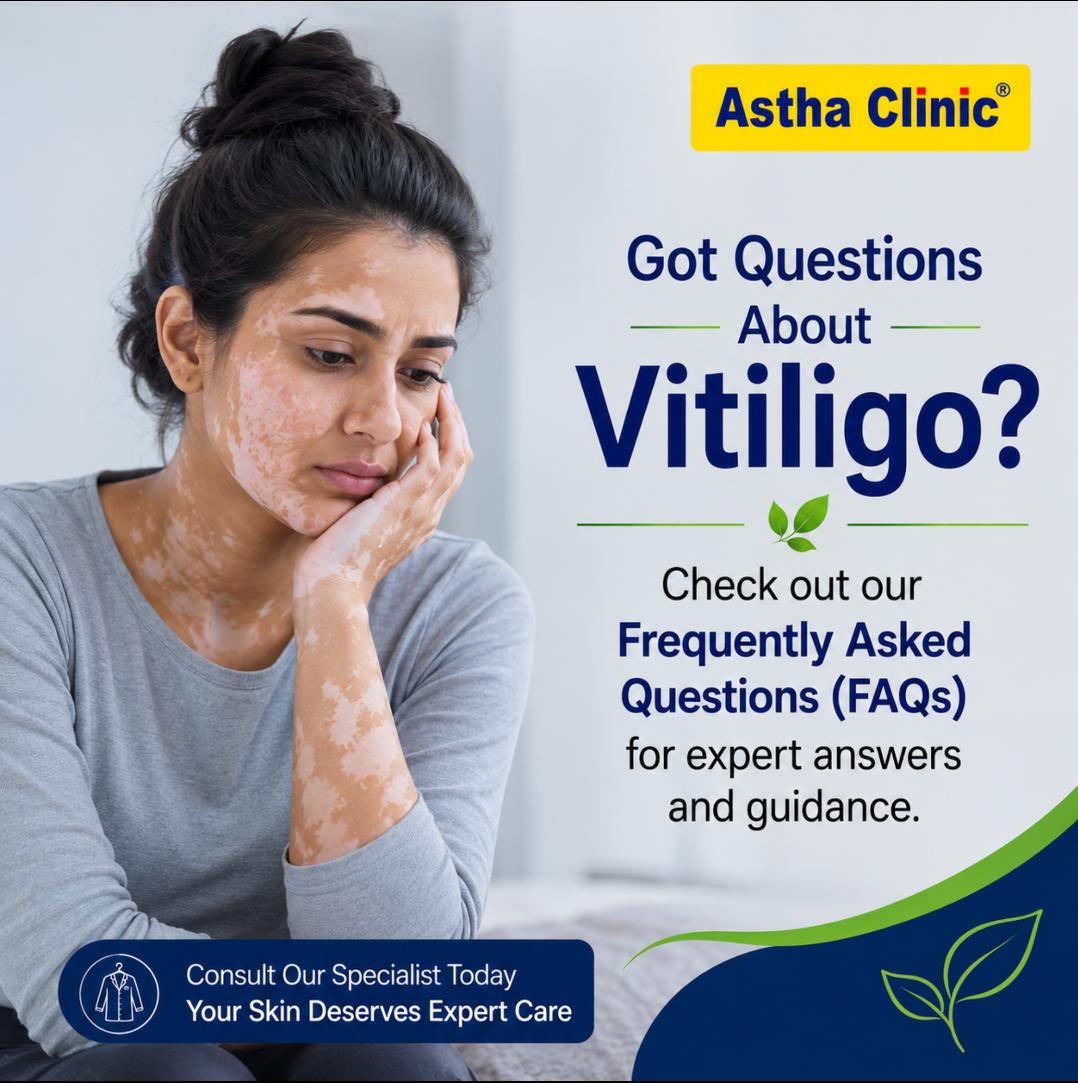
What is Vitiligo (White Patches)?
Vitiligo is a skin condition in which the natural color of the skin starts disappearing due to the loss of melanin pigment. It appears as white patches on different parts of the body such as the face, hands, feet, lips, scalp, or around the eyes.
Vitiligo is not contagious and does not spread by touching another person.
Why Do White Patches (Vitiligo) Occur?
Vitiligo may occur due to several reasons, including:
- Autoimmune disorders
- Genetic or family history
- Excess mental stress
- Hormonal imbalance
- Weak immune system
- Nutritional deficiencies
- Chemical exposure
- Skin injury or burns
In many patients, the exact cause may not be clearly identified.
What Are the Early Symptoms of Vitiligo?
Common early symptoms include:
- Small white spots on the skin
- Loss of skin color around lips, eyes, fingers, or joints
- Premature whitening of hair, beard, or eyebrows
- Increased sensitivity to sunlight
- Slow spreading of white patches
Early diagnosis and proper care can help control the progression.
Is Vitiligo Dangerous?
Vitiligo is generally not physically dangerous, but it can affect a person emotionally and psychologically. Many patients experience low confidence, stress, anxiety, or social discomfort due to visible white patches.
Proper treatment and counseling can greatly improve quality of life.
What Precautions Should Be Taken in Vitiligo?
Patients with vitiligo should follow these precautions:
- Avoid excessive sun exposure
- Avoid unnecessary steroid creams without medical advice
- Reduce stress and anxiety
- Maintain a healthy lifestyle
- Eat nutritious food rich in vitamins and minerals
- Avoid harsh chemical-based cosmetics
- Avoid skin injuries, burns, or friction
Consistency and patience are very important during treatment.
Can Stress Increase Vitiligo?
Yes, emotional stress and anxiety may trigger or worsen vitiligo in some patients. Stress can affect the immune system and may increase the spreading of white patches.
Yoga, meditation, proper sleep, and positive thinking may help in managing stress.
What Are the Side Effects of Long-Term Steroid Use in Vitiligo?
Long-term or improper use of steroids may cause several side effects, such as:
- Skin thinning
- Stretch marks
- Acne or pimples
- Burning sensation
- Increased hair growth
- Redness and irritation
- Dependency on steroid creams
- Reappearance or worsening of patches after stopping treatment
Steroids should only be used under medical supervision.
What Are the Benefits of Herbal and Homeopathic Medicines in Vitiligo?
Herbal and homeopathic approaches aim to support the body naturally and may help in:
- Improving immunity
- Supporting natural skin pigmentation
- Reducing the spread of patches
- Improving overall skin health
- Managing stress-related triggers
- Providing gentle and long-term support
Many patients prefer herbal and homeopathic treatment because it is considered comparatively gentle on the body when taken properly under expert guidance.
Can Vitiligo Be Controlled Naturally?
In many cases, vitiligo progression can be managed with:
- Healthy diet
- Stress management
- Proper sleep
- Sun protection
- Natural supportive therapies
- Regular treatment and follow-up
Every patient is different, so results may vary.
What Foods Are Helpful in Vitiligo?
A balanced and nutritious diet may support skin health. Helpful foods may include:
- Fresh fruits and vegetables
- Nuts and seeds
- Foods rich in Vitamin B12, Copper, Zinc, and Iron
- Green leafy vegetables
- Adequate water intake
Healthy eating supports overall immunity and wellness.
Which Foods Should Be Avoided in Vitiligo?
Some patients may benefit from avoiding:
- Junk food
- Excessively processed foods
- Excess alcohol and smoking
- Artificial chemicals and preservatives
Dietary responses may vary from person to person.
How Do White Patches Improve During Recovery?
During recovery, patients may notice:
- Tiny brown or black dots appearing inside white patches
- Gradual return of normal skin color
- Reduction in patch size
- Stopping of new patch formation
- Hair regaining normal color in affected areas
Repigmentation usually starts slowly and improves gradually over time.
How Long Does Vitiligo Treatment Take?
Vitiligo treatment requires patience because skin pigmentation returns slowly. Some patients may notice improvement within a few months, while others may need longer treatment depending on:
- Duration of disease
- Size and location of patches
- Age of the patient
- Immune response
- Consistency of treatment
Regular follow-up is important for better results.
Is Vitiligo Curable?
Many patients achieve significant improvement and stable results with proper treatment and lifestyle care. Early treatment often gives better outcomes.
Each patient responds differently, so treatment plans should be individualized.
Can Children Also Get Vitiligo?
Yes, vitiligo can occur in children as well as adults. Early diagnosis and safe treatment are important to prevent progression and improve confidence in children.
Is Vitiligo Contagious?
No, vitiligo is not contagious. It does not spread by touching, sharing food, or living together with a person who has vitiligo.
Why Is Early Treatment Important in Vitiligo?
Early treatment may help:
- Control spreading
- Improve chances of repigmentation
- Reduce emotional stress
- Prevent larger patches from developing
Ignoring early symptoms may allow the condition to progress further.
Can Lifestyle Affect Vitiligo Recovery?
Yes, a healthy lifestyle may positively influence recovery. Important lifestyle habits include:
- Regular sleep
- Stress control
- Balanced diet
- Physical activity
- Avoiding smoking and alcohol
- Staying mentally positive
Lifestyle management works as supportive care along with treatment.
What Message Would You Like to Give Vitiligo Patients?
Vitiligo is manageable, and many patients improve successfully with proper treatment, patience, and positivity. Never lose confidence. Early care, regular follow-up, and healthy habits can make a big difference in recovery and overall well-being.